
Every time I access 21 Casino and scan the lobby, I hold one number in the back part of my mind: the house edge https://21scasino.com/. It’s the silent partner in every spin, every card dealt, and every dice roll. A lot of players view it as some dubious casino trick, but it’s not. It’s a statistically predictable percentage that tells you how much the game is intended to keep over the long run. At 21 Casino, where the name itself nods to the classic game of blackjack with the minimum possible advantage, understanding this concept can completely change how you choose your games. I see too many people pursue huge progressive jackpots without understanding that the edge devours their bankroll faster than they think, while others play low-edge table games without ever realizing why their money lasts longer. This article will dissect the house edge in plain language, explore how it affects every part of the 21 Casino experience, and give you the practical lens I use to assess whether a game is worth my time.
Roulette tables and the Advantage You Can’t Ignore
Roulette at 21 Casino forces me to confront the house edge with raw honesty because there are no skill‑based decisions to hide behind. The single‑zero European wheel has a 2.70% edge, while the double‑zero American version increases that to 5.26%. The difference is anything but subtle; over 1000 spins at €1 each, a European player expects to lose around €27, while an American player deals with an expected loss of over €52. Whenever I access the roulette section, I immediately check the wheel configuration, not the table colour. I have found that 21 Casino highlights European and French roulette variants, and the French version with the “la partage” rule on even‑money bets halves the edge on those wagers to just 1.35%, which I regard as a hidden gem for cautious players. This rule guarantees I get back half my even‑money bet when the zero hits, and it makes a tangible difference in how long my session lasts.
I stay away from American roulette entirely unless I am seeking a specific atmosphere or side‑bet variant, and even then I limit my exposure. The presence of a double zero appears minor, but mathematically it creates one extra losing https://www.thestar.com/sports/sports-betting/how-to-bet-on-the-nhl-live-betting-futures-parlays-and-more/article_e57c04ca-711d-5b26-b37e-8fbd92a884e4.html pocket out of 38, and the payouts do not change to compensate. That single number is the purest expression of a higher house edge. I also watch racetrack bets and neighbour bets, which do not affect the underlying edge but can accelerate the rate of wagering if I am not careful. At 21 Casino’s live roulette tables, I enjoy the immersion, and I often watch patterns for entertainment, but I never kid myself that any system can overcome the edge. The combination of wheel speed, dealer signature, and a perfectly balanced rotor means each number remains as random as the mathematics predict. My play is always about regulating the speed of loss, not reversing the percentages. That mindset enables me to enjoy the game without falling into the gambler’s fallacy, which this casino’s elegant roulette interface can easily entice.
Regulation Fairness and Why 21 Casino’s Safety Supports a True House Edge
The whole notion of house edge only matters if the games are honest and the advertised odds match reality. At 21 Casino, the apparent security measures and regulatory oversight assure me that the edge is not being secretly inflated. The platform runs under a licence from a acknowledged gambling authority, which requires independent testing of the random number generators and regular audits of payout percentages. I check the licence information in the footer of the site, and I take comfort in the fact that games from tier‑one studios like Evolution and NetEnt are tested by certified labs before they ever appear on my screen. SSL encryption protects my personal data and financial transactions, which might look unrelated to the edge, but a compromised session weakens any mathematical model because the risk is no longer limited to the game. I consider airtight security a necessity for any discussion of house advantage.
What differentiates 21 Casino apart in my eyes is the transparency around responsible gaming and the accessibility of self‑imposed limits. A casino that promotes deposit caps and reality checks indicates that it expects players to interact with the house edge as an informed choice, not as a trap. I have utilised the session timer to guarantee I never grind past the point where fatigue erodes my strategy, especially in blackjack. Knowing that the edge is fixed gives me a baseline; recognising the operator upholds that baseline by refusing to manipulate games gives me trust. The house edge at 21 Casino is not a hidden agenda; it is the openly disclosed price of the experience, guarded by encryption, licensing and independent oversight. Whenever I settle at a table or load a slot, I do so with the certainty that the advertised RTP corresponds to a real, audited mathematical model. That assurance is the basis of every strategic decision I have described.
What Exactly Is the House Edge and Its Calculation
The house edge is the mathematical advantage the casino maintains in any game, shown as a percentage of each wager that the house aims to hold over millions of rounds. I always explain it as the cost of fun, not a hidden fee. For example, if a slot has a house edge of 4%, that means for every €100 wagered in total across all players, the casino aims to hold about €4 as gross profit while returning €96 in wins. This is not deducted from your individual bet; it stems from the gap between the true odds of winning and the payout odds the game offers. In European roulette, a straight-up bet pays 35:1, but the true odds of hitting a single number are 1 in 37 because of the single zero, creating a built‑in edge of 2.70%. I calculate it simply: divide the number of losing outcomes by total outcomes and adjust for the payout. That fractional difference may look tiny, but it compounds relentlessly over thousands of spins or hands, which is why I always check the rules before I start playing.
At 21 Casino, the mechanics behind the edge are no different from anywhere else, but the importance of acknowledging them grows when bonuses and wagering requirements enter the picture. Most games contribute differently towards clearing a bonus, precisely because the house edge varies so much. A low‑edge blackjack title might contribute only 10% towards a playthrough requirement, while a high‑edge slot contributes 100%. I have seen players commit the error of assuming all games are equal, only to lose their bonus funds before they ever reach a withdrawal. The edge is also shaped by side bets. In craps and blackjack, the main bet might carry an edge below 1%, but a tempting side bet like Perfect Pairs can push the house advantage well above 5%. I treat those bets as a separate game with its own ruthless mathematics, never as a harmless add‑on. Understanding that the edge is baked into the paytable and the rules, not into some imaginary rigging, is the first step towards a smarter session at 21 Casino.
Transaction Methods, Settlement Periods and How Fees Impact Your Effective Edge
A concept that seldom receives enough attention is the “effective edge” generated by deposit fees, withdrawal charges and currency conversion. When I gamble at 21 Casino, I consider more than the game’s posted house edge and consider the friction of moving money. If a payment method involves a 2‑3% fee and I deposit €200, that loss is equivalent to immediately facing an extra house advantage before I put a single bet. Fortunately, many e‑wallets like Skrill and Neteller, as well as debit cards, are settled without additional charges at the casino level, though I always check the terms on the cashier page because policies can shift. The real edge only crystallises if I can take out my winnings without excessive delays or hidden deductions. I anticipate e‑wallet withdrawals to be processed within 24 hours on weekdays, while card payouts and bank transfers may require 3 to 5 business days. Delays do not affect the mathematics, but they try patience and can cause poor decisions like reversing a withdrawal.
The time it takes for funds to become available also affects the practical house edge when I am trying to meet a wagering requirement. If a bonus playthrough requires I wager €1000 on slots within seven days, a slow deposit clearance or a pending withdrawal that ties up my balance could push me to play faster or chase, which indirectly increases my exposure to the house edge. I always maintain a separate bankroll for bonus play and choose payment methods that credit instantly and release swiftly. At 21 Casino, the cashier typically offers Visa, Mastercard, Skrill, Neteller, Payz and bank transfer, each with its own processing time profile. I advise testing a small withdrawal early to see exactly how long it takes before you commit a large balance. Understanding that the true cost of each bet factors in any payment friction bridges the gap between the theoretical edge and what I actually encounter over a month of play. When I minimise those extra costs, I am effectively giving myself a lower combined edge, which is a rare win‑win.
Video Slots and the Hidden Edge: Return to Player, Risk Level and Randomness
Slots dominate the 21 Casino selection, and I consider every spin as a small mathematical event. Each slot’s house edge is predetermined by its payout parameters, which typically falls between 94% and 98% for most titles I have reviewed. That means the edge goes from a reasonable 2% up to a punishing 6%. I pay close heed because the visual spectacle often draw attention from the fact that a 94% RTP machine keeps twice as much as a 97% one over time. The outcome is controlled by a random number generator that makes every spin unrelated, so streaks are mental, not reliable. The house edge does not mind if the last ten spins were losses; the next spin carries exactly the same long‑term disadvantage. I frequently see games at 21 Casino where the RTP is shown inside the info panel, and I make a point to match it with similar titles before I allocate funds.
Volatility, often called variance, operates alongside the edge to shape the ride. A volatile slot can produce a huge win on the first spin or drain a balance with no bonus trigger at all, yet the house edge holds constant. I have spun NetEnt’s Dead or Alive with a 96.8% RTP but extreme volatility, and the swings can hide the fact that the edge is actually fairly modest. At 21 Casino, I divide my slot sessions into two buckets: the low‑risk pile where I select games with 97% or higher RTP and medium volatility to protect my bankroll, and the entertainment category where I take on a 4% edge in return for the chance of a 5000x win. This separation keeps me from fooling myself. I also confirm whether a game’s advertised RTP is the base value or incorporates a progressive jackpot contribution, because that part is not returned to the base game. Being aware of these mechanics eliminates the frustration that comes when a “high RTP” slot consumes your balance faster than a low-house-edge table game.
Why the House Edge Is More Important Than RTP When Selecting Games
I often hear players discuss only return‑to‑player percentages, or RTP, as if it gives the full picture. RTP is merely the opposite side of the house edge: a game with 96% RTP has a 4% house edge. But focusing on RTP alone can be misleading because it suggests you get 96% of your money back each session, which is only accurate over a vast number of rounds. In a single night of gaming, short‑term variance prevails, and the edge is what steadily pushes your session result into the red over time. At 21 Casino, I always prioritise the edge itself when I aim to extend my table play, because a low edge means less mathematical pressure per round. When I switch to slots, I embrace a higher edge in return for entertainment value and the opportunity for a bonus round, but I never mistake a high RTP claim for a promise of consistent returns.
The edge also combines with volatility in a way that RTP does not reflect. Two slots might each have 96% RTP, yet one distributes wins in frequent small bursts while the other stays quiet for 200 spins before a major payout. The house edge remains identical, but the practical experience feels worlds apart. My rule of thumb at 21 Casino is to check the help file of each game to see the edge or at least infer it from the RTP disclosures, then choose whether the risk profile matches my mood. For table game aficionados, the edge is the most practical piece of information. A European roulette table with a 2.70% edge will reduce a bankroll half as fast as an American wheel with a 5.26% edge, all else being equal. That is the kind of concrete, checkable difference I look for every time I open the live casino tab. Knowing the edge gives me a clear hierarchy: craps, blackjack, baccarat, then roulette, then slots, then the lottery‑style instant wins. I continue to play them all, but I approach it with my eyes open.
Real-Time Dealer Games at 21 Casino – Chances in Real Time
The real-time casino section at 21 Casino, powered by Evolution and other studios, brings the house edge to life in the most clear way possible. I observe real cards being drawn and real wheels spinning, which removes any persistent doubt about software manipulation. The edge on the main bets in live baccarat, for instance, sits at 1.06% on the banker bet after the standard 5% commission is deducted, while the player bet carries 1.24%, and the tie bet – which I rarely touch – can exceed 14%. I believe the mathematics equivalent to the digital versions, but the social pace and the decision‑making time often prevent me from rushing into high‑edge side bets. The live game show titles like Crazy Time or Monopoly Live, however, blend a low‑edge base segment with bonus rounds that can carry very high volatility and a variable house edge that is less clear. I regard these as entertainment products with a cost built in, much like a slot machine with a fancy bonus wheel.
One huge advantage I rely on in live dealer play is the clear deck penetration and the consistent rules. At 21 Casino’s live blackjack tables, I observe the shoe and can confirm the 3:2 payout and the dealer stand rule before I ever lay a chip. The house edge here mirrors the physical game’s mathematics without any RNG abstraction. I also appreciate the ability to interact with the dealer and other players, which provides me with a rhythm that prevents impulsive side‑bet sprees. The live roulette wheels are regularly inspected for balance, and the results are broadcast without delay, so I understand the edge is exactly what the wheel configuration determines. I recommend that anyone exploring 21 Casino’s live lobby sort by rule set, not by dealer personality. A European blackjack table with early surrender and dealer standing on all 17s can push the house edge below 0.4%, and spotting that deal is worth more to me than a charismatic host. The live casino is where the mathematical promise of the game meets real supervision, and I find that comforting.
How House Edge Shapes Your Session Across 21 Casino’s Game Lobby
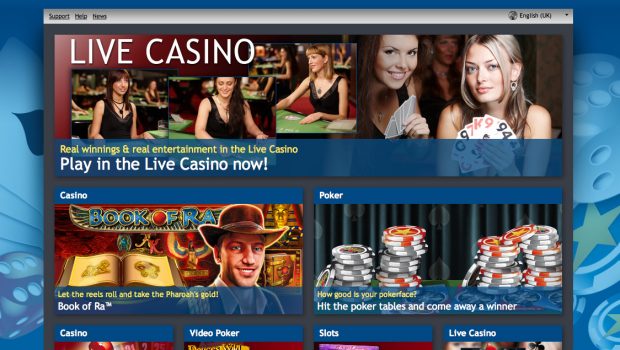
Navigating the 21 Casino lobby with house edge in mind turns a simple scroll into a tactical session. The sheer range of titles from providers like NetEnt, Microgaming, and Evolution means the edge can shift from under 0.5% on a perfect‑strategy blackjack hand to over 10% on certain themed scratch cards. I instantly filter games not by popularity but by the underlying mathematics that suits my goal. If I wish to relax with a slow bleed, I move to the live dealer baccarat tables where the banker bet carries a house edge of just 1.06% before commission. If I am chasing a quick thrill with the potential of a massive multiplier, I pick a high‑volatility slot knowing the edge might hover around 3.5% to 4.5%. 21 Casino makes this practical because the portfolio is tagged by category, allowing me to divide low‑edge table games from the slots and instant‑win section quickly.
What I value most about the lobby is that it does not conceal the information I need. Many slots show their RTP directly in the game rules, and for table games, the rules variations are clearly stated. At 21 Casino, I can determine whether blackjack pays 3:2 or the less favourable 6:5 just by opening the game; that single rule change alone contributes about 1.4% to the house edge. The sheer size of the library also means I can find multiple versions of the same game with different edges. I have noticed European roulette with a single zero sitting right next to an American double‑zero variant, and the edge difference is pronounced. I encourage any new player to spend five minutes checking paytables and rules before depositing. The lobby’s smooth filters on desktop and mobile alike allow me to isolate low‑edge games when I am in serious mode, and reserve the high‑edge fun titles for when I am playing purely for the spectacle.
21: Where Skill Collides with the Casino’s Mathematical Advantage
Blackjack is the cause of many players flocking to a brand called 21 Casino, and it continues to be the table game where I feel most in control. The standard house edge for classic blackjack with favourable rules can be driven below 0.5% when I use perfect basic strategy. That number is not theoretical; it comes from the combination of dealer standing on soft 17, blackjack paying 3:2, the ability to double after splitting, and the option to split aces once. Every tweak to those rules changes the edge measurably. I always verify the 21 Casino blackjack table rules before I sit down. If I notice a 6:5 payout on a natural blackjack, I step away, because that alone boosts the edge by roughly 1.4%, erasing much of the strategic advantage I strive so hard to preserve. The brilliance of blackjack is that my decisions directly influence how close I approach to that theoretical edge.
Beyond the main bet, side bets like 21+3 or any pair wagers are pitfalls for the house edge. These bets often possess a built‑in advantage of 4% to 10%, yet they appear harmless when wagered for a single chip. I consider them as a separate negative‑expectation game running in parallel. My suggestion for anyone reading this and visiting 21 Casino is to either avoid side bets entirely or define a strict, almost symbolic budget for them, because they undermine the very edge advantage that makes blackjack special. The casino also offers multi‑hand variations, which do not modify the edge per hand but amplify the rate at which my bankroll is subjected to it. I employ multi‑hand play only when I seek faster accumulation of comp points or bonus wagering progress, but I maintain my basic strategy card open on my phone screen. Counting cards is not a realistic tactic online due to continuous shuffling algorithms, so basic strategy continues to be the only practical tool. At 21 Casino’s live dealer tables, the pace is slower, which actually gives me time to consider each decision and cling tighter to that razor‑thin edge.
Turning the House Edge Toward a More Strategic 21 Casino Session
I have walked through the mathematics, the game categories and the banking realities, but the point of all this knowledge is to apply it. Before I spend a cent at 21 Casino, I spend 30 seconds to check the game’s edge, the rules that affect it, and the contribution rate towards any active bonus. When I want the longest possible session, I shift towards French roulette even‑money bets or low‑house‑edge blackjack tables, and I credit my account with a fee‑free e‑wallet. When I pursue the adrenaline of a potential jackpot, I deliberately select a high‑volatility slot, accept a 3.5‑4.5% edge, and set a loss limit that matches that expected drain. The difference is that I never enter blind. I view the house edge like a price tag, and I choose what I am willing to pay for entertainment.
This analytical approach does not drain the fun from 21 Casino; it actually boosts it because I stop blaming bad luck for predictable outcomes. I celebrate the wins as statistical gifts and see the losses as the cost of the session, which eliminates the sting of chasing. My final piece of practical advice is to always check the promotions page for current terms, because a welcome offer with a low wagering requirement can temporarily shift the combined odds in your favour if you combine it with a very low‑edge game and fulfill the playthrough before variance bites. That is the closest a recreational player ever comes to a positive expectation moment, and it is valuable hunting for. I will keep coming back to the lobby with the same checklist: confirm the edge, select my game, load my account smartly, and play within the mathematical boundaries I have set. That is the real advantage you can bring to the tables right now.